I have been watching a pattern take shape across sports that I think every AI developer should pay attention to. Leagues are happily letting machines settle questions with a measurable answer, and they are keeping humans firmly in charge of anything that needs judgment. Where they draw that line, and why, says a lot about how we should design AI into any decision that matters.
Baseball’s challenge system meets October
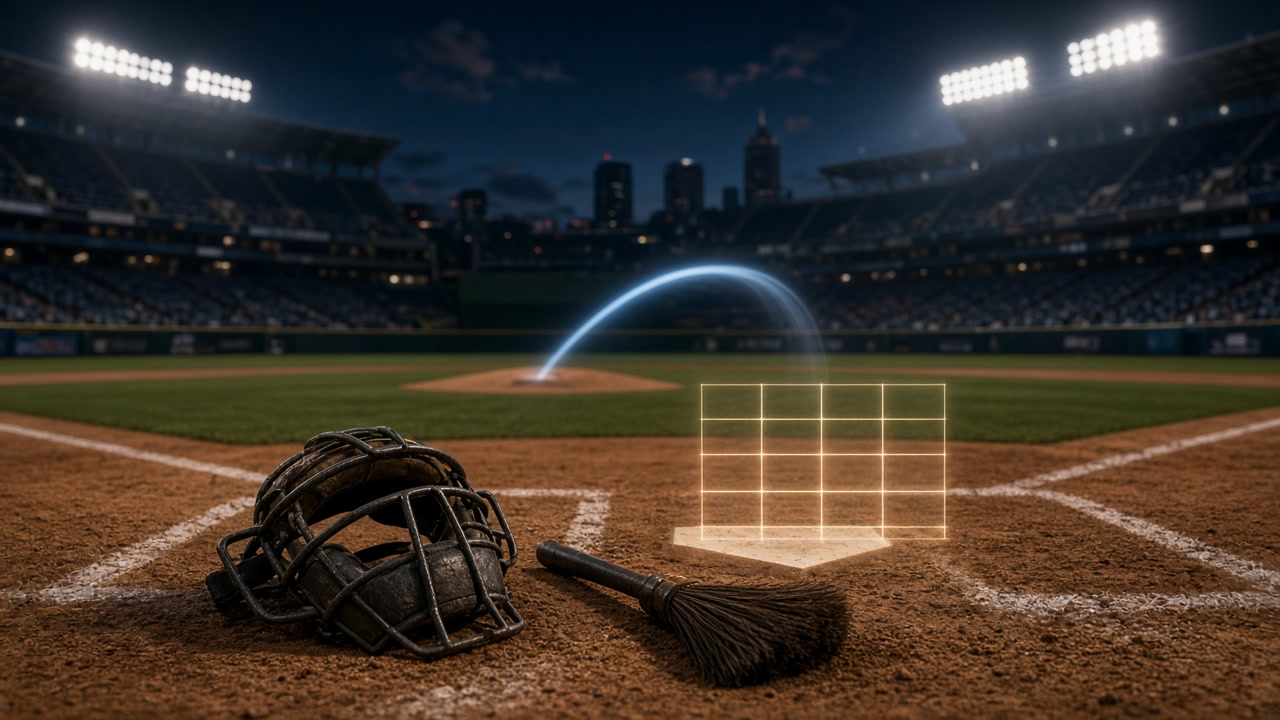
Major League Baseball introduced the Automated Ball-Strike (ABS) Challenge System for the 2026 season. As MLB.com explains, the human home plate umpire still calls every pitch. The system tracks the exact location of each pitch relative to the specific batter’s zone, and the batter, pitcher or catcher can challenge a call they think was wrong. Each team starts a game with two challenges, and the result appears on the videoboard and the broadcast almost instantly. MLB.com describes it as a middle ground between so-called “robot umps” and the long tradition of human umpires.
The system is now in its first postseason, and the numbers are fun to look at. Abstap, an independent fan-run tracker, counts 162 ABS challenges through the League Championship Series, with 98 overturned. That works out to a 60.5% overturn rate, against 53.8% in the regular season by Abstap’s count. Abstap is careful to add that on a sample of 162 challenges, the gap is still within the range of chance. I really appreciate that kind of honesty from a tracker, and I would treat the trend as interesting rather than proven.
I also want to be fair about terminology. ABS is ball tracking with a human challenge layer on top. It measures where a pitch crossed the plate and compares it with a defined zone. Calling that “AI officiating” is a stretch, and I think we do readers a favor when we describe these systems accurately. What makes it interesting for AI builders is the design: the machine answers a narrow, measurable question, and people decide when to ask it.
Basketball’s smart ball
The NBA is exploring something similar. According to Yahoo Sports, Wilson is testing a basketball with a one-gram embedded sensor that measures movement, spin and trajectory. Testing has taken place in the G League, Summer League and preseason, and players reportedly noticed no difference in feel.
Yahoo Sports describes very specific uses. The sensor could tell which team last touched the ball before it went out of bounds, or whether a defender’s fingertip changed the ball’s spin before a possible goaltending call. Alongside Sony’s Hawk-Eye optical tracking, the idea is to automate objective decisions like these, the ones that currently send games to long replay reviews.
The same article reports that Commissioner Adam Silver has discussed possible regular-season use as early as next season, with no definite date set. For now the smart ball is a test and a prospective officiating aid. Yahoo also reports that the proposed division of labor would leave referees responsible for judgment calls, particularly foul contact.
Not everyone is thrilled. Draymond Green said that “this is AI continuing to creep into basketball,” according to Yahoo Sports, while acknowledging that technology could reduce human error. I think that tension is healthy, and it is exactly the conversation we should be having about any automated decision.
Machines that flag, people who investigate
The integrity story is where this pattern becomes really clear. CNBC reports, based on documents it obtained, that the NBA has developed an internal AI-based monitoring platform. CNBC says the system analyzes basketball data, injury reports, social media information about player availability and individual betting data. In the league’s words, as quoted by CNBC, it is designed to help “promptly identify and investigate potentially suspicious betting activity.”
CNBC also reports that the NBA is restricting some bets its authorized partners can offer, such as wagers on which player scores the first basket, following gambling-related cases involving Jontay Porter, Terry Rozier, Damon Jones and Chauncey Billups. Yahoo Sports adds that follow-up investigations and disciplinary procedures remain human-led.
I love this as a design pattern. The model does what models do well: it sifts huge amounts of data and surfaces anomalies. People with context, accountability and legal responsibility decide what those anomalies mean. A flag is a lead for a person to follow up, and the system is built that way on purpose.
On the broadcast side
The same thinking shows up in media tools. Sports Business Journal reports that Owl AI launched a beta of Parliament, a live video intelligence platform, with a full launch planned for December. According to Owl AI, its agents, called “Owls,” track things like sponsor screen time and help clip big moments for quick highlights, and an “Ask Owl” feature lets you query broadcast data conversationally. Owl AI says it integrated TwelveLabs for contextual moments and ElevenLabs for voice in real-time translations, and that it is free to sign up during the beta.
These are Owl AI’s descriptions, and I have not seen independent testing. I like where the pattern points, though: automate the tedious, measurable work so producers have more time for the creative calls.
What I take from all this
Put these together and a simple principle emerges. Machines get the questions with a ground truth you can measure (where the pitch crossed, who touched the ball last, which bets look statistically odd), while people keep the ones that need context, fairness and accountability, such as whether that was a foul, whether someone broke the rules, and what should happen next.
If you are building AI into decisions at work, this is a lovely template. Be clear about which questions have a measurable answer. Let the system flag, and let people decide. Describe what your system actually does without inflating it. And measure honestly, with the humility Abstap shows about small samples.
Read the sources
I would encourage you to read the original pieces yourself. Each one has detail I could not fit here, and they are well worth the time.
- MLB.com: the ABS Challenge System explained
- Abstap: ABS postseason challenge tracker
- CNBC: NBA tightens betting rules and develops AI to flag suspicious wagers
- Yahoo Sports: the NBA is aggressively integrating artificial intelligence
- Sports Business Journal: Owl AI launches a live intelligence tool for broadcasts