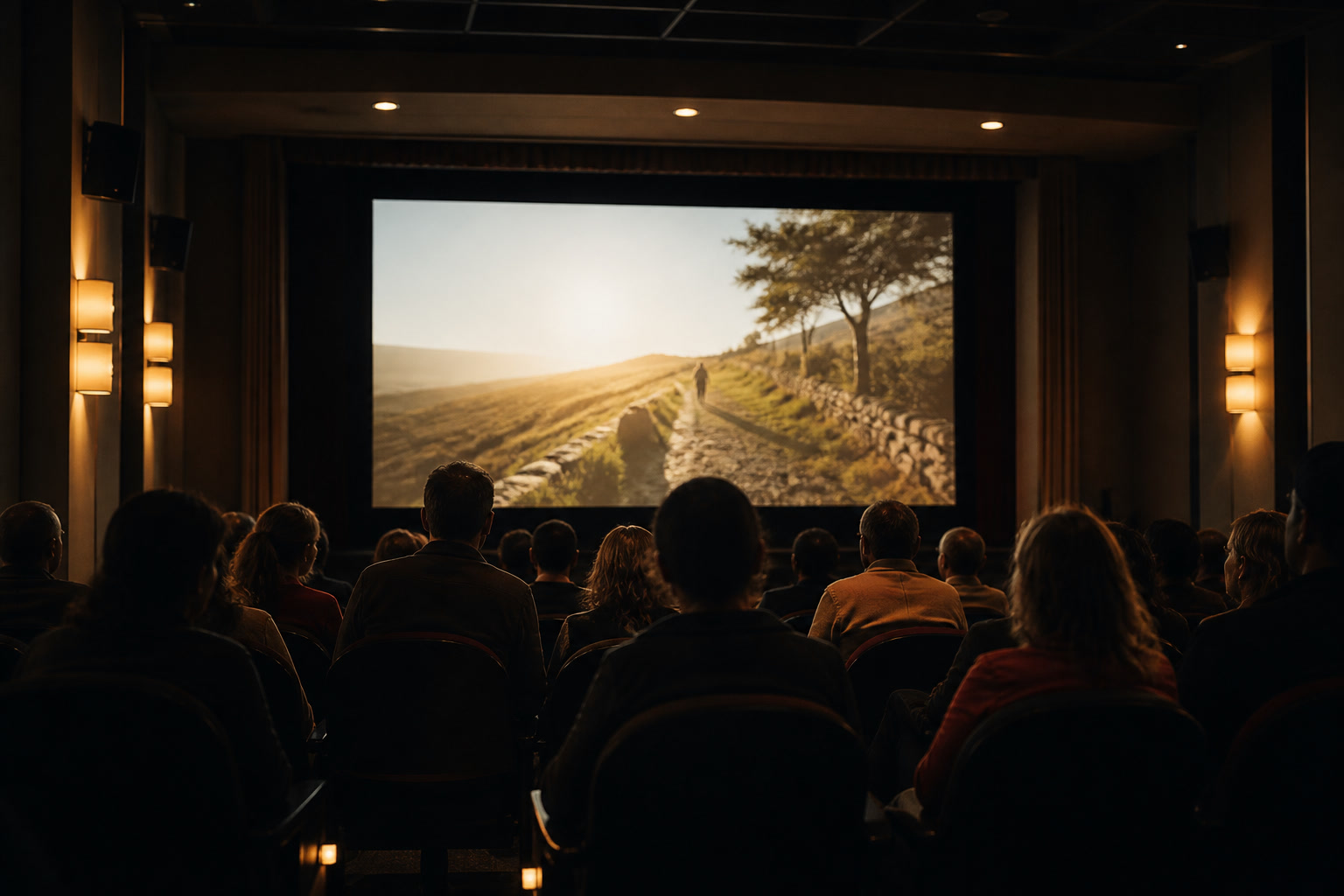
Venice opens tomorrow, and one of the films on the Lido was made in a way that would have sounded like science fiction a few years ago. Francesco Carrozzini’s Be Brave is a portrait of Diesel founder Renzo Rosso. Carrozzini did not shoot a single frame of his protagonist. He recreated Rosso at different stages of life with AI, while the talking-head interviews with real people stay in the film.
I care about this for a simple reason. The interesting question in AI filmmaking right now is who gets to put the work on a festival screen and a union-covered set, and under what contract. Venice is about to answer the first half in public.
A fully scripted documentary
Variety calls the film 85 minutes. The Biennale listing says 90. I would keep both numbers in view until you are in the room. Our Films, a Mediawan company, produced it. Roberto Beragnoli, credited as the AI artist and Creative AI Director, did a lot of the heavy lifting, with Blackstone in the pipeline as well.
The workflow, as Carrozzini describes it, will sound familiar if you have ever tried to get a generated person to behave. The film is fully scripted. They used pictures of Rosso from the era being depicted, then fought for voice, lip-sync, wardrobe, and, hardest of all, behavior across ages. He compares the labor to a big CGI feature. In the year and a half they spent making it, the tools changed enough that early work had to be redone.
Venice artistic director Alberto Barbera, when he invited the film, put it forward as an invitation to think about how AI as a tool can open new creative possibilities. Variety notes it is among the first AI features to launch from a top-tier festival. The public screening is listed for September 10 at 14:30 in Sala Grande, with more on September 11, and pass-holder screenings starting September 9.
Carrozzini is honest about the limit that still matters most. Once viewers know a performance is not human, he told Variety, after about five minutes the empathy drops. He would not currently take on a historic or present-day fiction film without actors. The line he wants in the film itself is that the human has to come first. That is the sentence I would keep on a syllabus. Festival inclusion is a real milestone. It does not settle whether generated faces can carry a fiction audience for two hours.
Gadot, Bitcoin, and six months of lawyers
The same week, Gal Gadot went on the record about Doug Liman’s Bitcoin, while promoting The Runner. Variety reports the film, with Casey Affleck, Pete Davidson, and Isla Fisher, was shot in a completely barebones space. Producer Ryan Kavanaugh claimed the $70 million production saved more than $200 million by using AI for production design and lighting. That is a producer claim, not an audited study. Hold the number lightly.
Gadot’s useful detail is the contract. She said it took six months of lawyer time, the longest contract she has ever worked on, because she did not want AI to have anything to do with her performance. The performances, she says, are all hers. SAG called her lawyers for pointers to update the SAG contract. Actors filmed up to ten hours without waiting on lighting. A broad crew still worked. AI was limited to sets and lighting. She has not seen a single finished shot. And she used the line you would expect: the train has left the station.
If you teach production, put that next to Carrozzini. One story is a festival documentary that rebuilds a living person on screen and still insists the human comes first. The other is a star protecting her performance in a union contract while the walls and lights are generated. Both are about who is in the room, who gets paid, and what the paperwork says before anyone yells action.
Google is still courting libraries
A little behind those two stories, the Los Angeles Times reported that Google has been approaching studio libraries, including Disney, Universal, and Warner Bros. Discovery, and has not closed deals. NBCUniversal said it is not in active conversations with Google on this. Google, WBD, and Disney declined to comment. SAG-AFTRA national executive director Duncan Crabtree-Ireland said no major studio has notified the union of a new AI licensing deal, which the contract requires.
One unnamed person floated character licensing at about $40 million per character on average. That is a single anonymous quote. I would not build a business model on it. I mention the reporting only as context: the festival screen and the star contract are moving faster than the library licenses.
Time to dig deeper
Start with Variety’s Carrozzini interview and the Biennale page for Be Brave. Then read Gadot on Bitcoin. If you write or produce, map one of your own scenes onto those two deals: who is generated, who is contracted, and who still has to be in the room. The technology is moving quickly. The craft questions, and the contracts that encode them, are the ones worth lingering on.