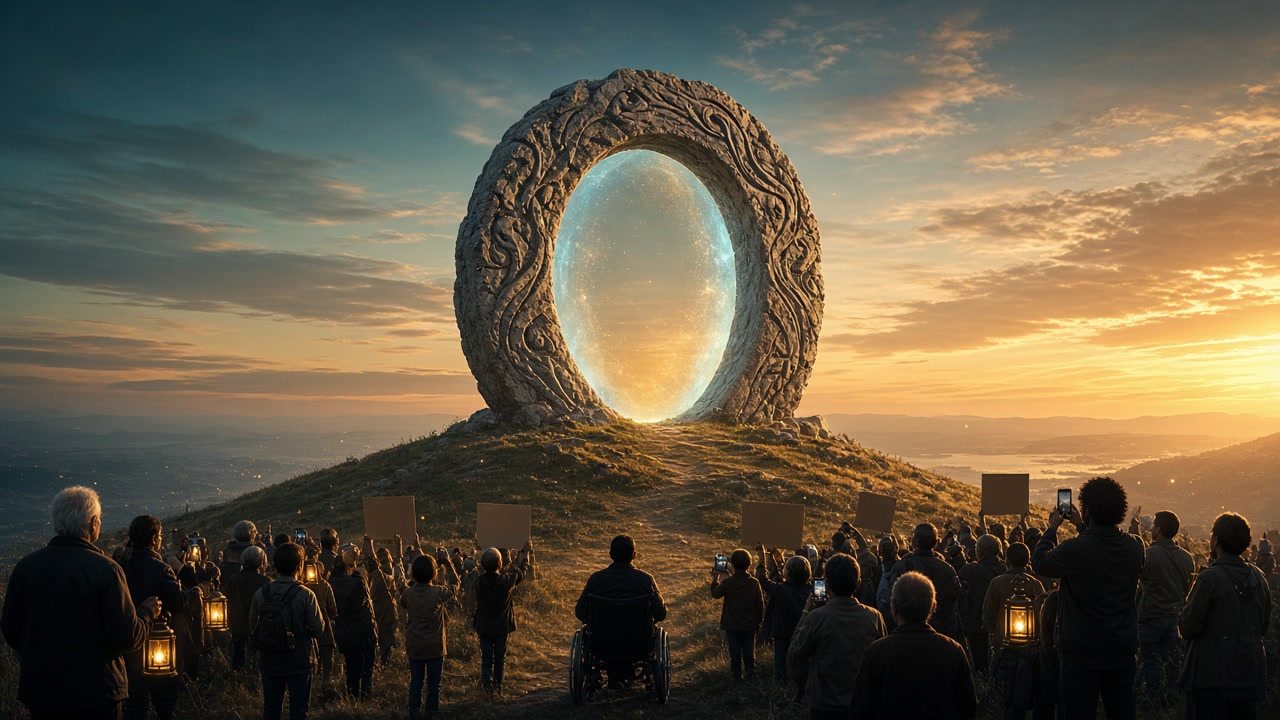
Amazon should bring back Stargate. The commercial case is still strong: an established fictional universe, an extensive catalogue, recognisable characters, and an international audience that’s volunteering its own time and money to help the franchise succeed.
What worries me is how Amazon goes about it. If a revival starts from the assumption that Stargate’s history and its existing audience are obstacles to get past, it could throw away the very things that make it worth reviving.
Since my June article, the business case has got more interesting. The fan campaign hasn’t lost momentum. What we’ve learned about Martin Gero’s proposed series suggests that welcoming new viewers was already central to its design. And this summer’s hits and misses offer a useful lesson: established worlds can be enormously valuable when the relationship with their audience is looked after, but that value can also easily be lost through unforced errors.
I come to this as someone whose career crosses technology and entertainment. I spent years leading AI advocacy at Google, working on how complex ideas reach audiences and earn their trust. I also write fiction, comics, and screenplays, and worked with Brad Wright and members of the Stargate cast on The Companion’s Stargate AI project.
I understand why a company needs growth, why expensive productions need commercial discipline, and why an existing audience on its own may not be enough. To me, those are reasons to get to know Stargate’s fans better. They’re potential customers and advocates, and they can tell you a lot about why the franchise has lasted.
Take Toy Story 5. It came out shortly after my original article and has earned about $1.14 billion worldwide, according to The Numbers. Its story takes a contemporary problem, a child’s relationship with a tablet, and explores it through characters and relationships audiences already know.
The way I read it, familiarity and something new worked together. Audiences already cared about these characters because of their long history, and the new premise gave them a reason to come back. Children meeting the characters for the first time could share the experience with adults who had known them for decades. That’s one of the most valuable things about an established fictional world: its audience can grow across generations.
Backrooms got to a similar place by a different route. It was already a hit in June, and its theatrical run has since taken its worldwide total to about $393 million against a reported $10 million production budget, according to The Numbers. The Associated Press reported that 86% of its opening-weekend audience was under 35.
This was a distinctive fictional world that already had an online following, brought to cinemas with its creator, Kane Parsons, directing. The people who had helped make that world culturally significant gave the film its commercial starting point. Its mysteries and imagery, and all the room it leaves for interpretation, gave that community plenty to talk about and share.
The two properties couldn’t be more different. What interests me is the relationship between each fictional world and the people invested in it. Both offered something recognisable that could travel beyond its existing audience, and that’s the opportunity I see for Stargate.
Lore is about much more than giving attentive viewers references to spot. It gives you characters whose decisions matter, discoveries with consequences, rules that make ingenuity satisfying, and unanswered questions that keep people talking. When that history supports good storytelling, existing fans have a reason to come back and newcomers have a reason to explore.
So an engaged community built around deep lore is a good sign of commercial potential. It shows that people have found something worth paying attention to over the long haul. Realising that potential still takes good creative judgment, the audience’s trust, and sensible costs.
Supergirl shows how easily the advantages of an established property can fall short. Its worldwide box office reached about $126 million against a reported $170 million production budget, according to The Numbers.
TheWrap reported that the young female audience it was aimed at didn’t materialise at the hoped-for scale: opening-weekend attendance was 59% male and 65% over 25. Its B-minus CinemaScore also suggested that the people who did go weren’t enthusiastic enough to build strong word of mouth.
The publicity got tangled up in arguments about gender, sexism, and the audience itself, and some commentators framed the film as alienating male fans. That’s worth looking at, but the evidence we have can’t tell us how many people stayed away because of those arguments. The fact that men made up most of an already small audience doesn’t prove or disprove that some men were put off.
The more useful commercial point is broader than that. When the conversation around a film turns into an argument about who’s welcome, it gets harder for people to hear the invitation to enjoy it.
Good marketing keeps existing customers enthusiastic while welcoming new ones. A campaign that leaves part of the audience feeling dismissed can damage the trust a property has built up over its history, and targeting a new demographic is no guarantee that it will turn up. Amazon should take both that risk and that opportunity seriously with Stargate.
There was a warning closer to home this summer, too. Amazon’s Masters of the Universe earned about $114 million worldwide against a reported $170 million production budget, according to The Numbers. Familiarity on its own wasn’t enough to carry that kind of investment.
None of this proves a universal formula, and box-office receipts aren’t studio profits. But the results do point to something practical: understand why the audience is attached, give them something that keeps them attached, and set costs according to realistic demand.
Stargate’s fans are giving Amazon unusually visible evidence of that kind of attachment. On September 4, the #SaveStargate campaign announced that its petition had passed 120,000 signatures. The organisers described activity at San Diego Comic-Con, Ascension Con in the UK, and Dragon Con in Atlanta, along with billboards in Times Square, and reported more than 500 donations and nearly $20,000 raised through a campaign fundraiser. The San Diego Comic-Con Unofficial Blog has also covered the campaign’s move into convention activity and international organising.
That behaviour tells you something commercially. People are spending their own money to promote a property Amazon owns. They’re organising events, recruiting supporters, and keeping a dormant franchise visible. They’re showing they’re willing to do some of the community-building work that a new show would otherwise have to start from scratch.
You can’t turn a petition straight into a subscription forecast. But it does give Amazon a large group of people it can actually ask about what they want and what they’d do, and everything happening around the petition shows commitment that goes beyond a signature.
Calling all of this “backlash” misses the most valuable thing about it: these people want Amazon to succeed at selling them something. And they’ve given that feedback using their own dollars.
What they’re saying is that a decision overlooked something they value and would happily support. The sensible commercial response is to get curious. What do they want preserved? What would make them recommend a new series? Which friends or family members might they bring along? What would turn their frustration now into excitement for a launch? The answers would tell Amazon a great deal about its customers.
That’s also why Amazon’s approach, as it’s been publicly reported, worries me. Dropping a series tied to franchise veterans, amid reports that its appeal was seen as too concentrated among existing fans, sends the message that those fans’ enthusiasm might count against a project.
If that thinking guides the next revival, Amazon risks going into production having already weakened its most readily available source of goodwill and support. Whoever writes it will inherit that problem along with the fictional universe.
There’s still room for a better outcome, though. Deadline reported in July that Amazon was looking for another writer to take on Stargate, and GateWorld highlighted that report again in September. That suggests continued interest, although it isn’t a new series order.
A different writer could bring an excellent idea, and it’s perfectly reasonable for Amazon to go in a different direction from Gero’s. What matters is that the next creative team understands what it’s being trusted with.
We’ve also learned enough about Gero’s version to push back on the idea that respecting Stargate necessarily makes it inaccessible. According to convention reporting, Michael Shanks said at Ascension 2 that he would have returned as Daniel Jackson, and that the script welcomed newcomers while honouring the existing universe.
Whatever comes next should aim for the same thing. Give the writer real access to the people who built Stargate. Bring its audience into structured research alongside people who have never watched an episode. Work out what makes people attached to it: curiosity, competence, humour, cooperation, and the possibility of discovery. Then test whether the new story actually gets those qualities across.
If newcomers struggle, find out exactly where they get lost. An unfamiliar reference, an overloaded opening, or an unclear motivation is a specific creative problem. “The weight of established lore” is far too vague a reason to tear down everything the franchise has built up.
My worry is that Amazon could spend heavily to win new viewers while needlessly losing people who are already eager to take part. The encouraging part is that it has the chance to do something far more commercially productive: give the existing community a great new story and a welcoming way to bring other people into it.
I’d be glad to help with that. My experience covers technology, storytelling, and this particular creative community, and I understand the need to turn audience enthusiasm into a business case that holds up. That’s why I write these articles!
Stargate’s fans have spent months showing Amazon that the relationship still matters to them. They’ve kept at it, and that’s an open invitation to rebuild it.
Amazon should take them up on it.